

Johann Baptist Homann – Americae Mappa generalis
Title: Americae Mappa generalis
Engraver/Publisher: Johann Baptist Homann (1664–1724), published by Homann Heirs
Place & Date: Nuremberg, 1736 (dated in cartouche: A. MDCCXXXVI)
Medium: Copperplate engraving with original hand color
Dimensions: (not provided, typically ca. 48 x 56 cm for Homann folio maps)
This finely engraved map of the Americas was published by the Homann Heirs in Nuremberg and reflects the state of geographical knowledge in the first half of the 18th century. The coastlines are carefully delineated, with the Americas shown in full and parts of western Europe and Africa included to emphasize transatlantic connections. Political boundaries are highlighted in color, with colonial possessions indicated. The western part of North America still carries speculative cartography: California is firmly depicted as a peninsula, but the Pacific Northwest remains indistinct, with Nova Albion noted along the coast. In the interior, numerous Indigenous peoples are identified, including Apaches, Padoucae, and Iroquois.
South America is shown with considerable detail, divided into Spanish and Portuguese spheres, with the Andes prominently rendered. The Caribbean islands are carefully engraved, reflecting their importance for colonial trade.

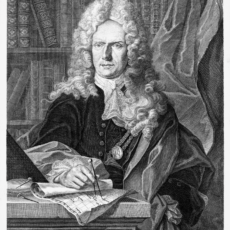
The famous German 18th Century cartographer Johann Baptist Homann founded a mapmaking firm in Nuremberg in 1702. Upon his death in 1724, it passed to his son Johann Christoph (1703-1730). and later was managed by Johann Michael Franz and Johann Georg Ebersberger under the name Homann Heirs (Homann Erben).
The decorative cartouche in the lower left is in typical Homann style, featuring allegorical figures representing the Americas: Indigenous figures with feather headdresses, an African figure bearing a parasol, tropical fruits, and exotic animals. In the background, smoking volcanoes evoke the dramatic landscapes of the New World. The imagery emphasizes both abundance and exoticism, themes common in European representations of the Americas.

Texts below image (Cartouche transcription):
AMERICAE Mappa generalis
Secundum legitimas projectionis stereographicae regulas relationesque recentissimas et observationes sociorum Acad: Reg: Sc: quae Parisiis celebrantur, nec non secundum mentem D. M. Hasiu MPP in partes suas methodicas divisa concinnata et delineata ab Ioh: Georg: Pusch … Phil: Magistro in lucem producta per Homannianos Heredes. A. MDCCXXXVI.
(Translation: “General map of America, according to the legitimate rules of stereographic projection and the most recent reports and observations of members of the Royal Academy of Sciences in Paris, and also according to the method of D. M. Hasius, divided into its proper parts and neatly delineated by Johann Georg Pusch, published by the Homann Heirs, 1736.”)
Context:
Johann Baptist Homann founded one of the most important map publishing houses of the 18th century in Nuremberg. After his death in 1724, the firm continued under the name Homann Heirs (Homanniani Heredes), producing updated and expanded editions of his maps. This 1736 map reflects both scientific influences from the Paris Academy and the commercial appeal of richly embellished cartouches. Collectors prize these maps for both their historical cartography and their decorative qualities.