The Perrollaz Sisters – Folk Art Portraits by Dominik Spaeni
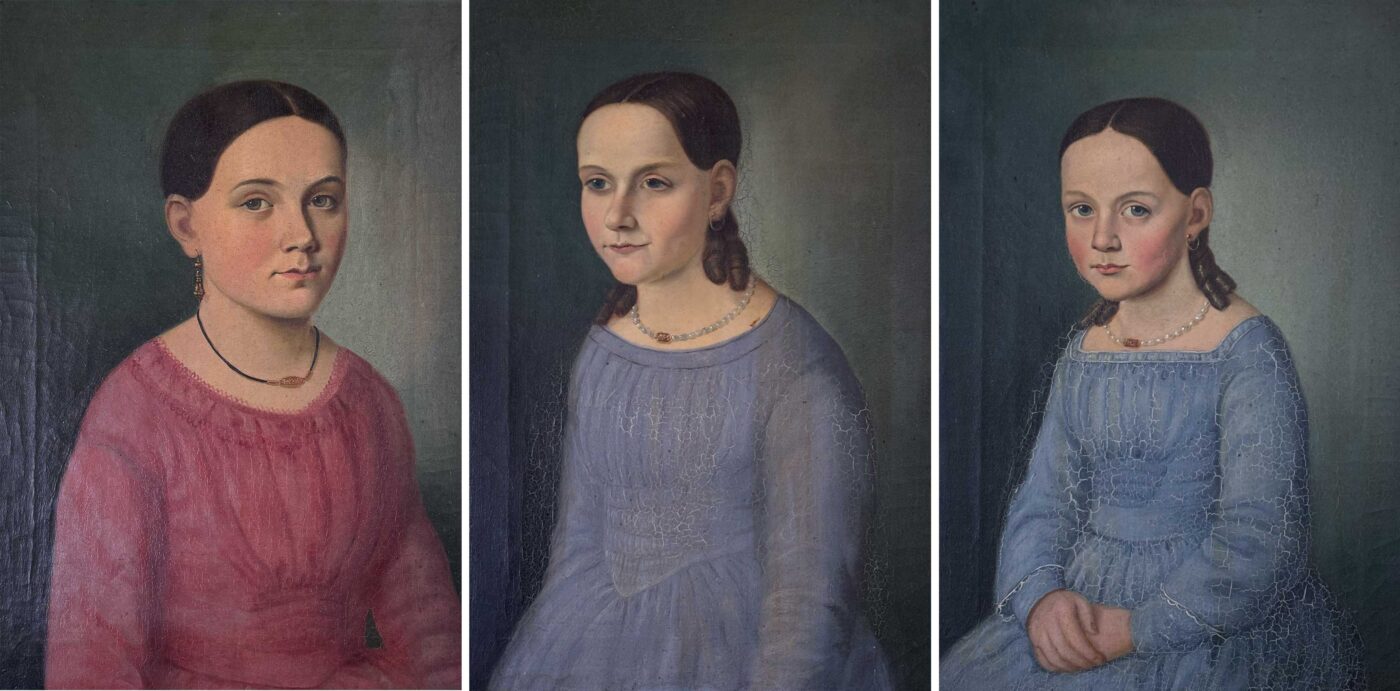
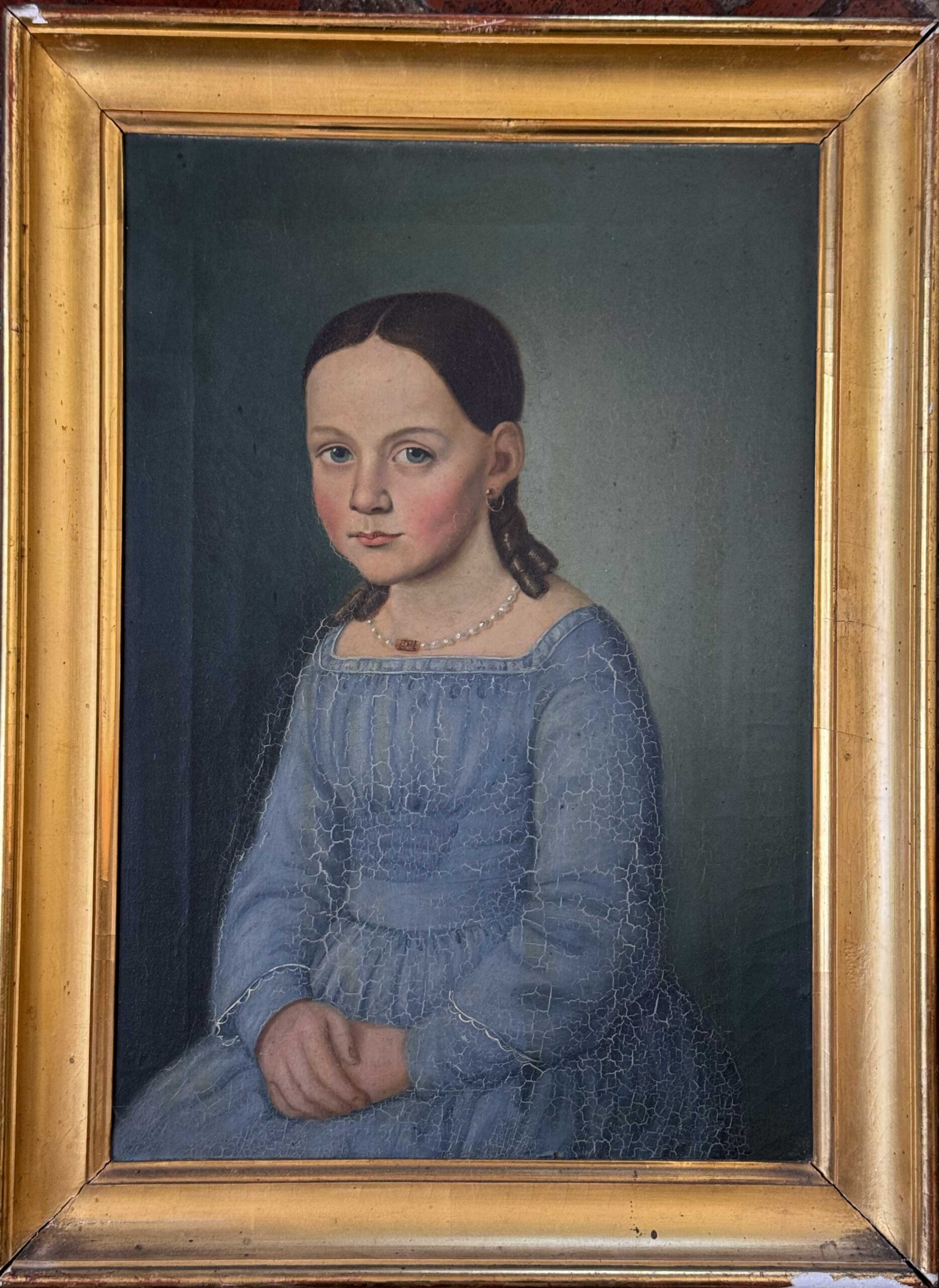
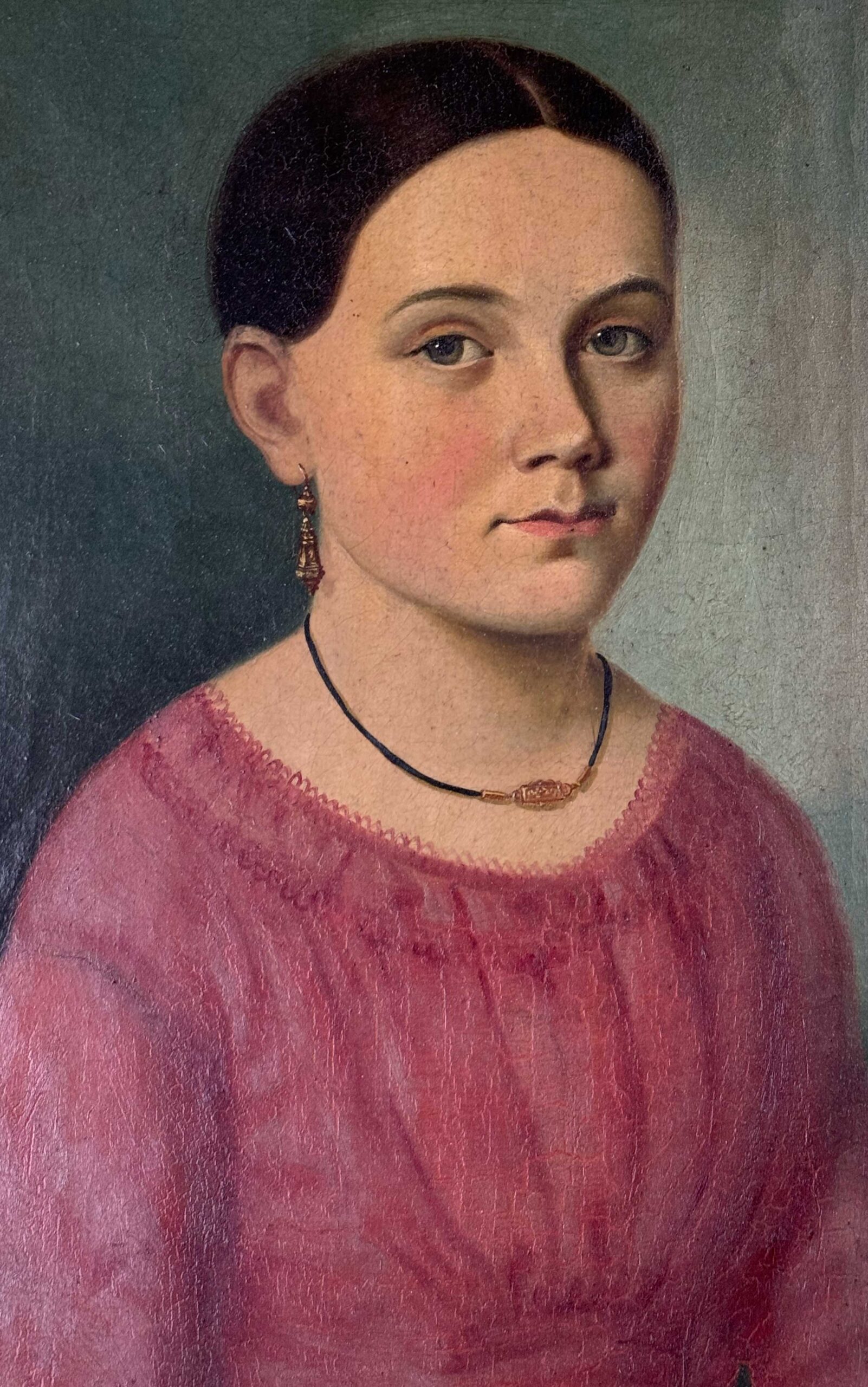
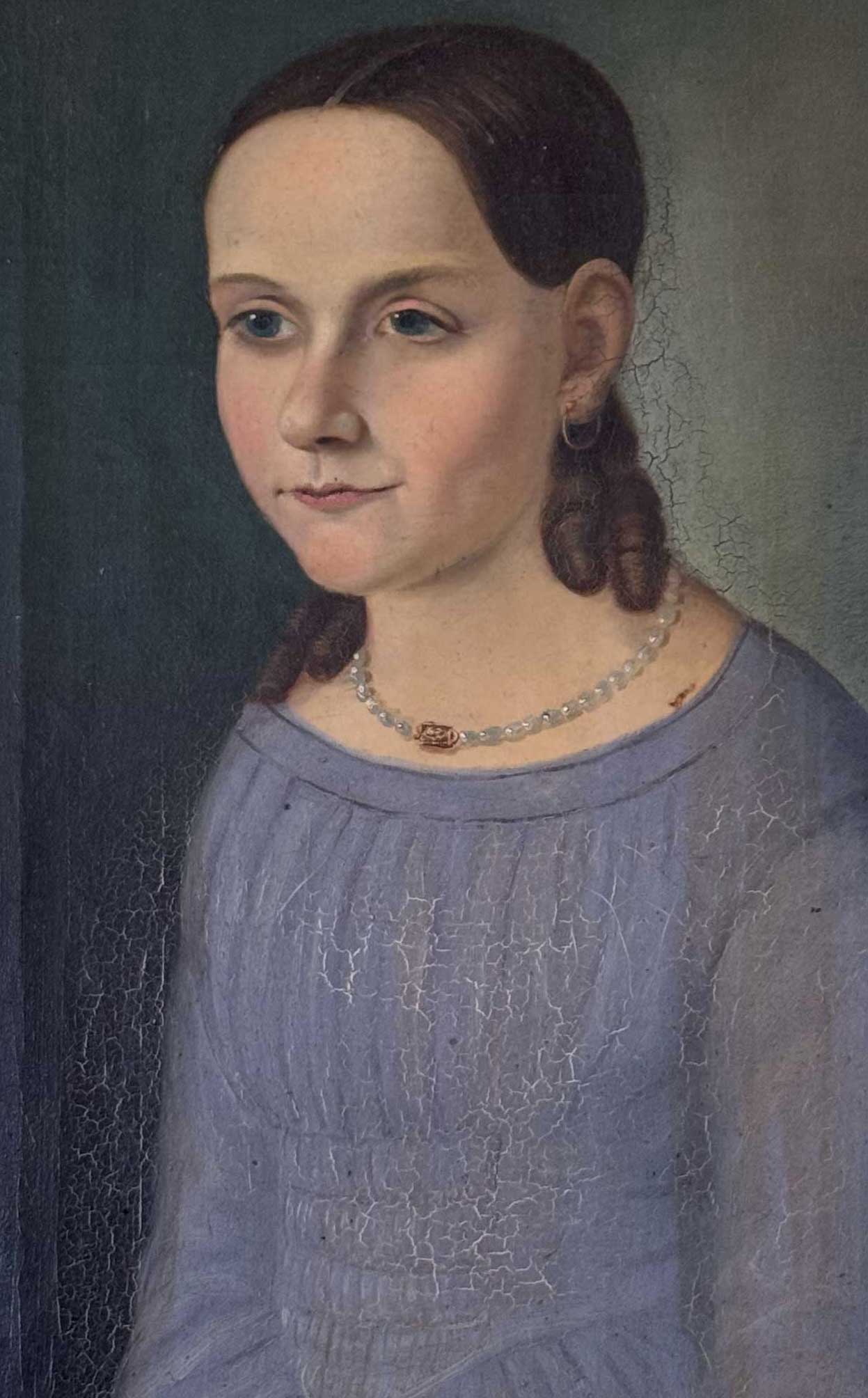
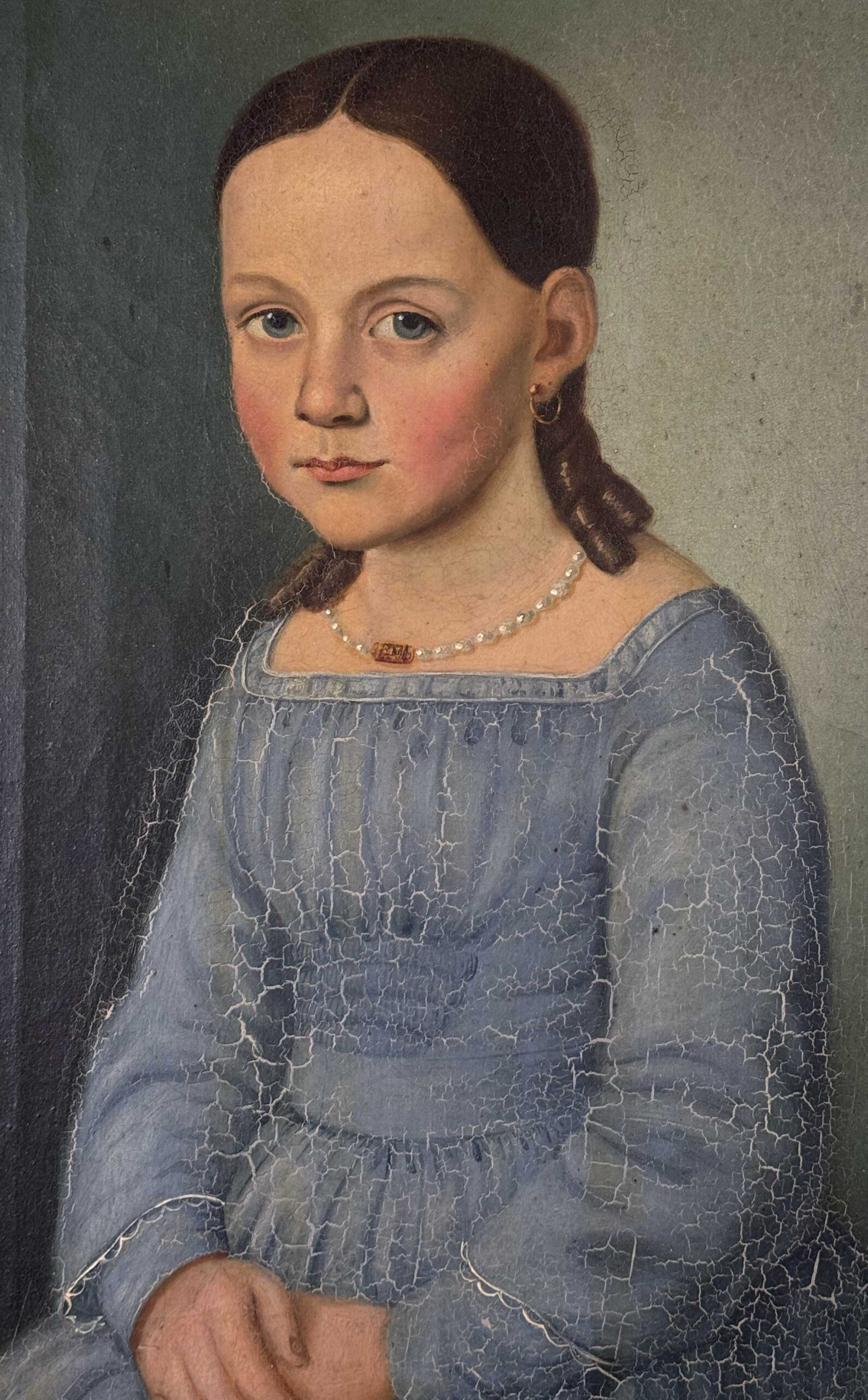
Portaits the Three Sisters Perrollaz dated 1846
Swiss, 19th Century, Folk Art
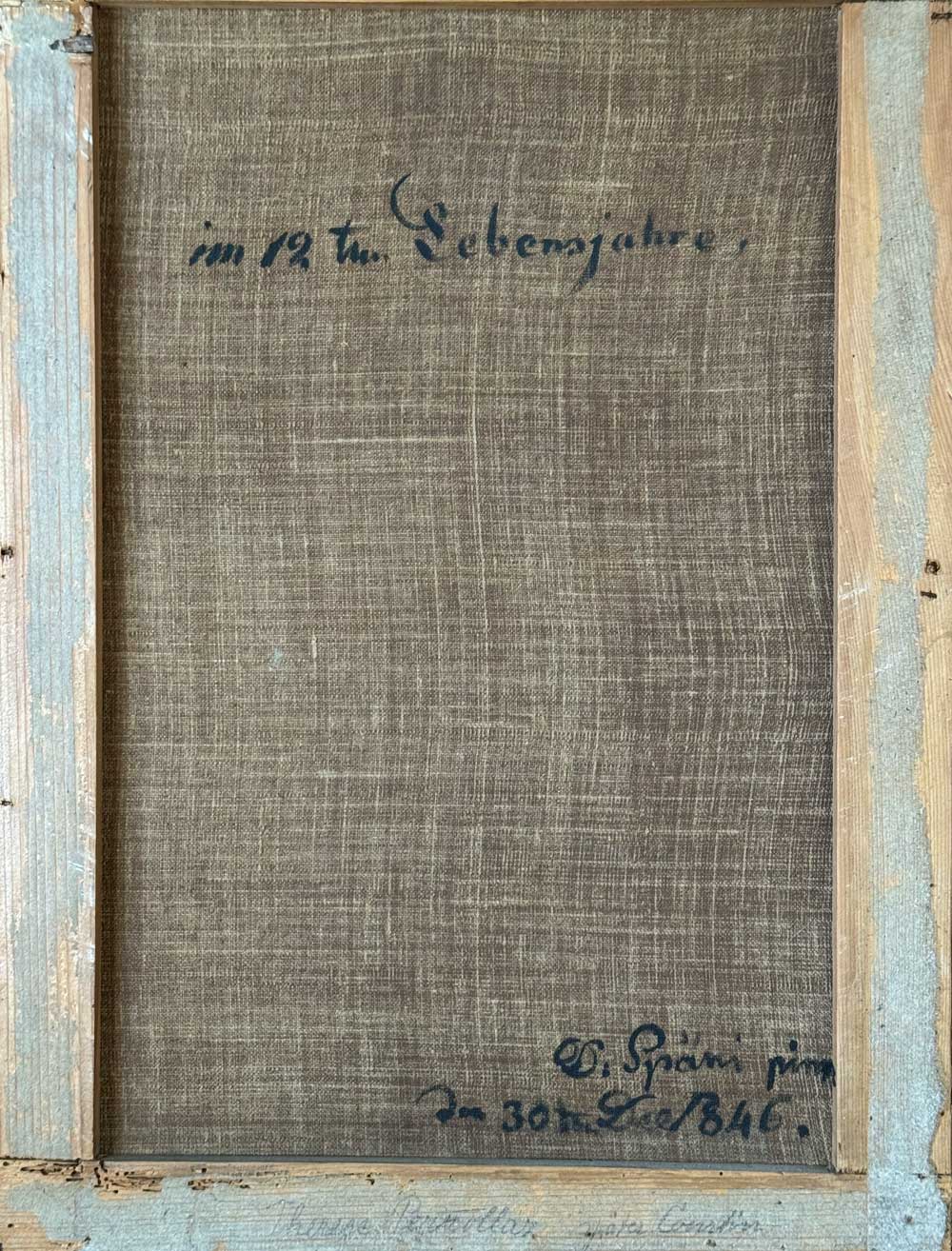
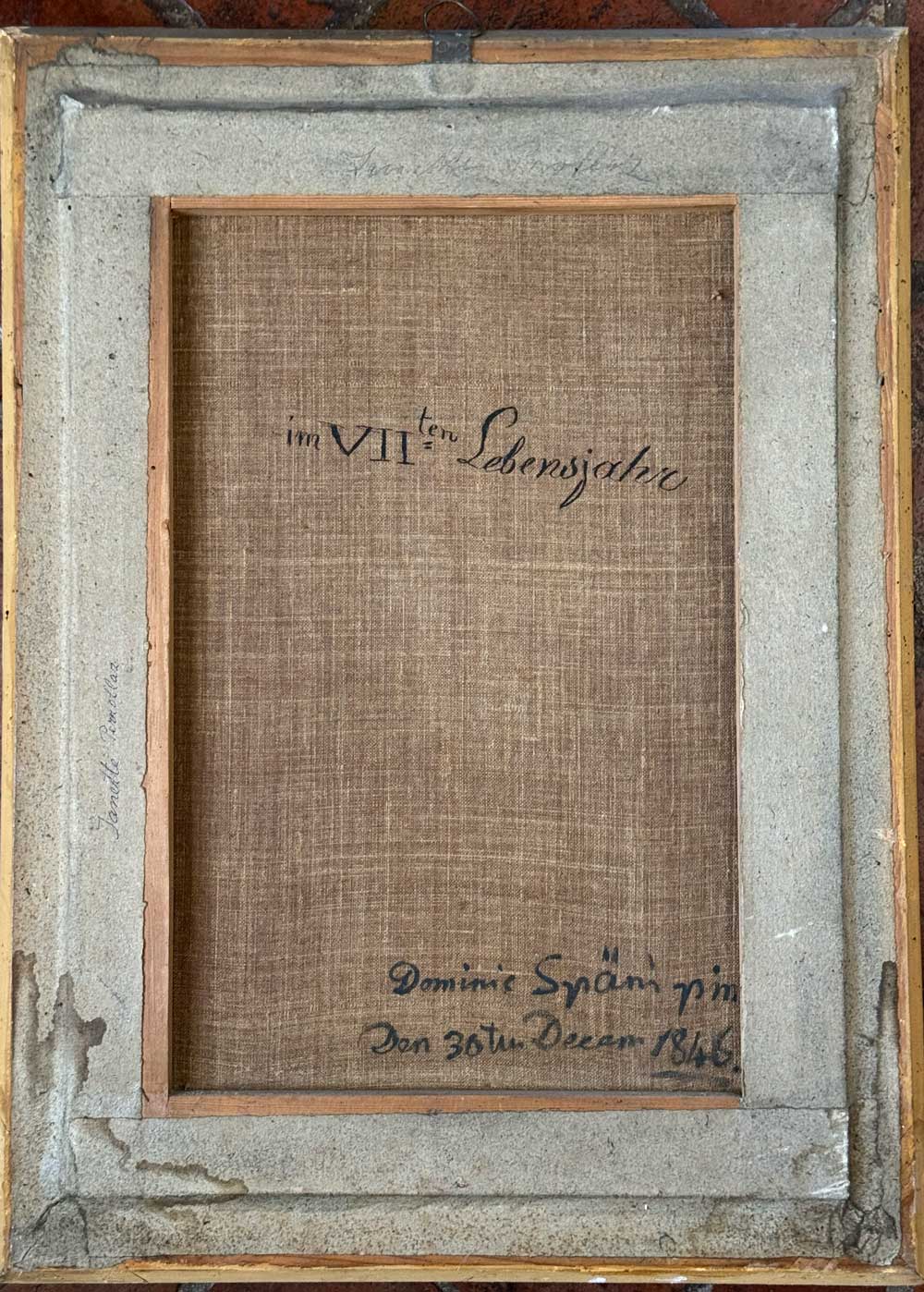
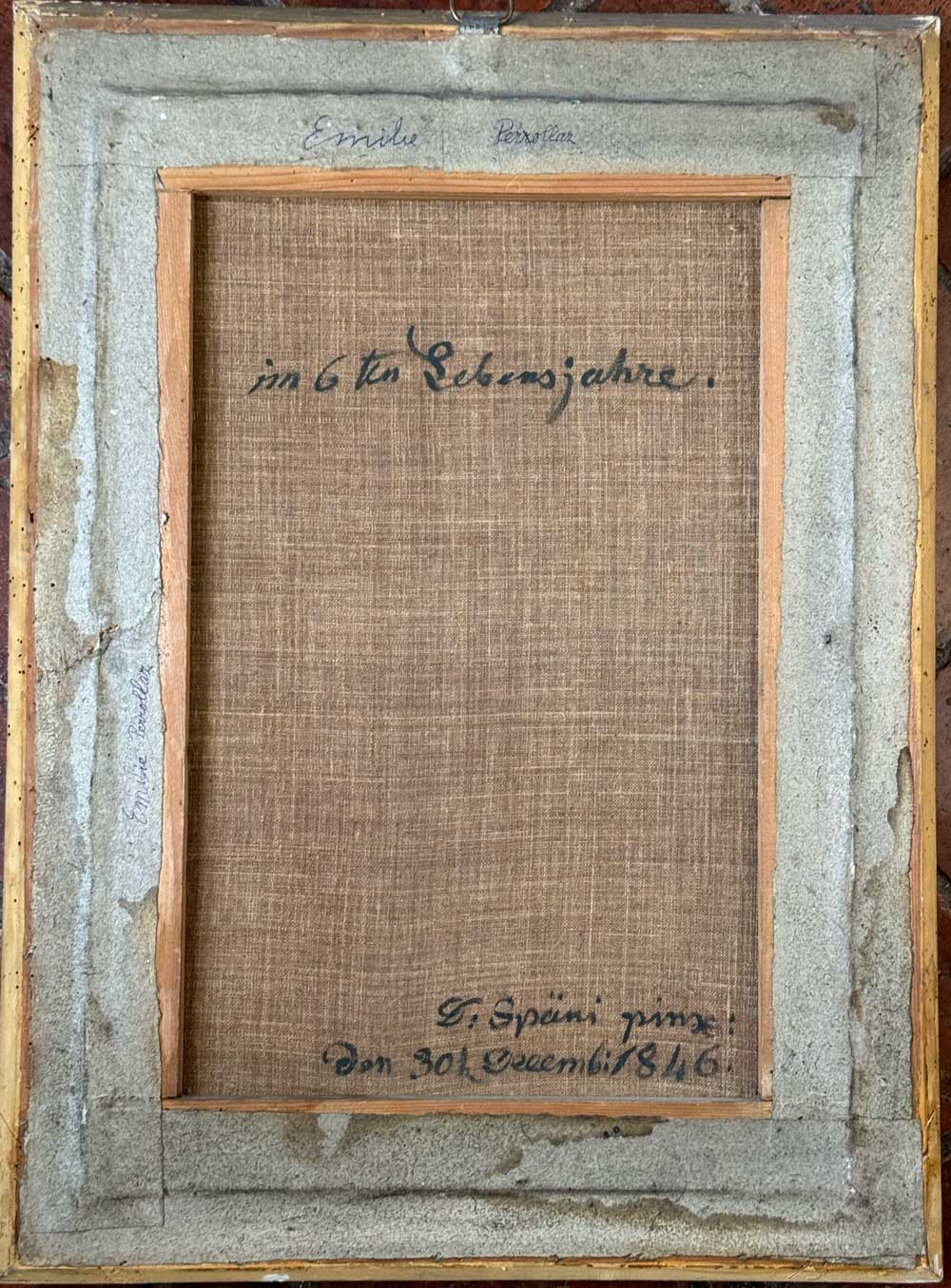
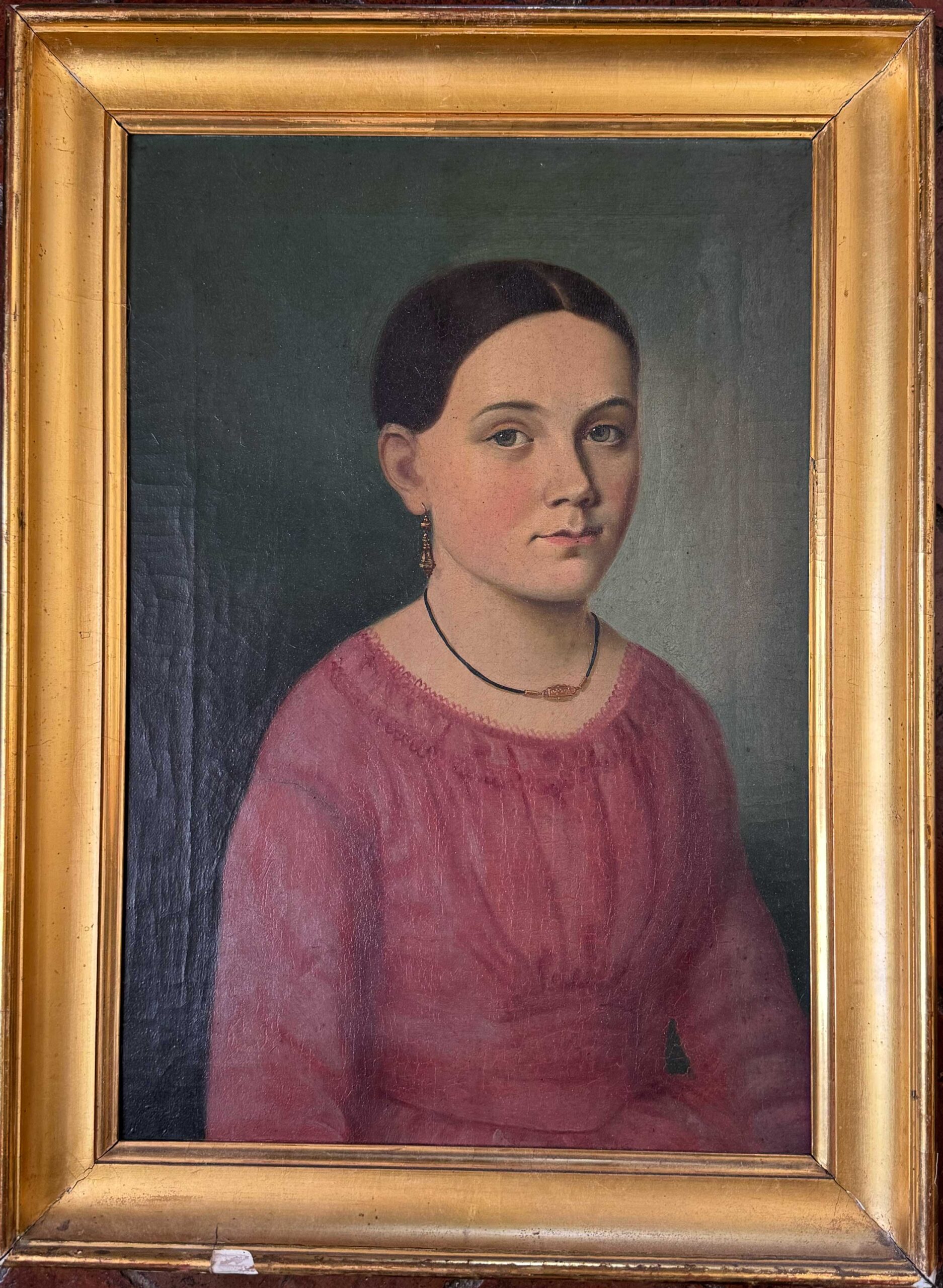
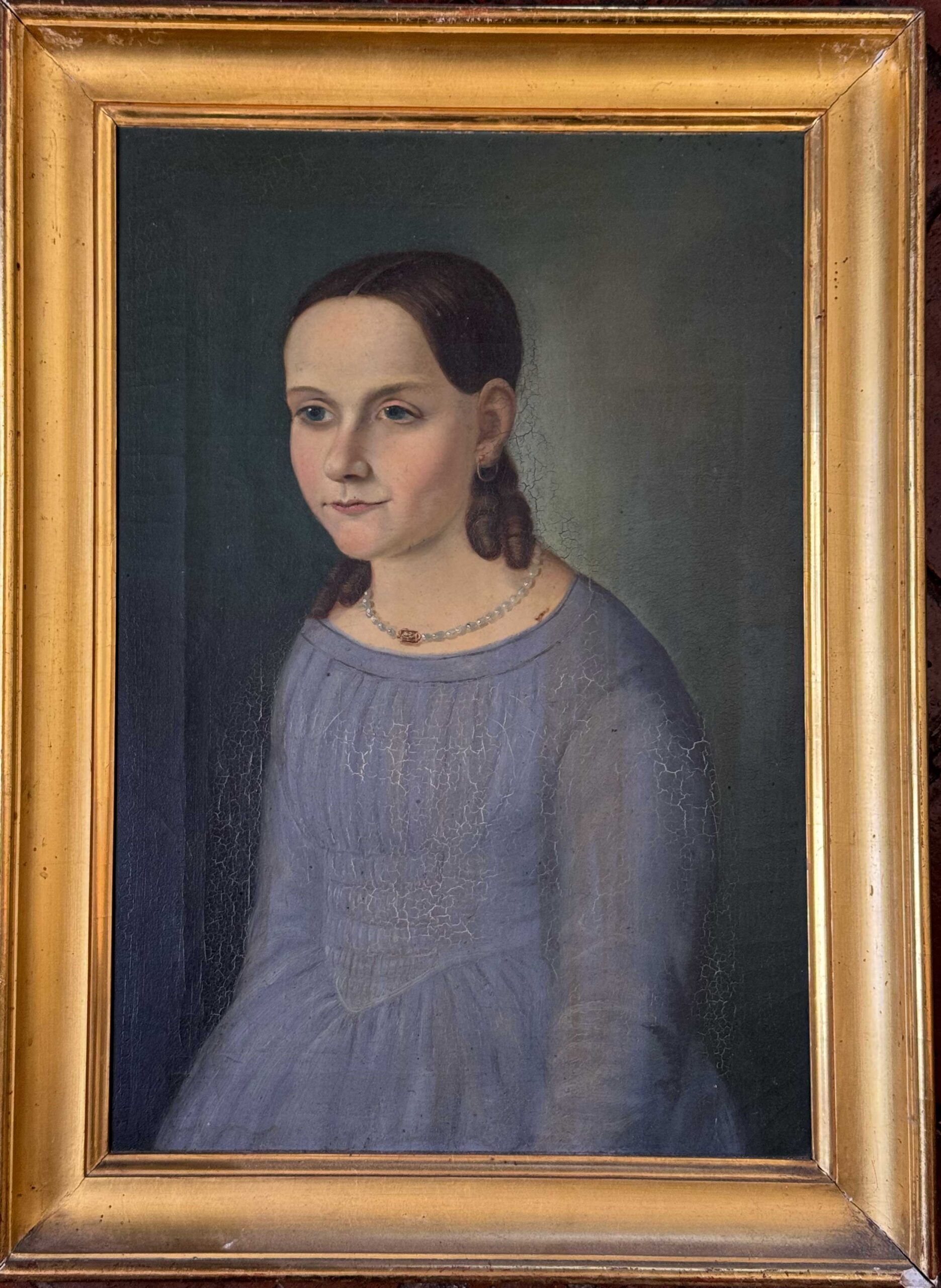
A charming set of three early 19th century Swiss folk art portraits depicting three sisters from the Perrollaz family. Painted in 1846, these provincial portraits capture the quiet dignity and individuality typical of rural Swiss portrait painting of the period. Each painting has been annotated, dated and signed on the back. The girls names are given as Therese Perrollaz age 12, Janette Perrollaz age 7, and Emilie Perrollaz age 6.
Their direct gaze, simplified modeling, and careful attention to costume place them within the tradition of early nineteenth century Swiss provincial and folk portraiture, sometimes described as naïve portrait painting. Portraits of this kind were often commissioned by rural families across central and western Switzerland during the early nineteenth century.
Dimensions: 32 x 46 cm in the frames
Condition: The paintings show a fine and even craquelure consistent with their early nineteenth century age. The network of cracks lies flat and stable across the surface, with no lifting or flaking of the paint layer. The surface has a soft, matte character rather than a glossy varnish, allowing the original paint layer to remain clearly visible.
The original canvas is visible on the reverse and bears the artist’s inscription and date. The paintings have not been lined (rebacked), and the canvases appear to remain in their original state. The stable craquelure and untouched reverse suggest that the works have aged naturally and have not undergone major structural restoration.
Click on images to enlarge
(1811-1896)
Also known as: Dominik Späni or Dominic Späni
Jakob Dominik Späni (1811–1896) was a Swiss painter known primarily for his portraits of people from central Switzerland during the nineteenth century. He was born on 1 August 1811 in the village of Arth in the canton of Schwyz, the son of Johann Thomas Späni and Maria Franziska Häusler. Although his parents lived in nearby Oberägeri, he attended school in Arth before beginning an apprenticeship in painting with the Zug-based craftsman and decorative painter Kaspar Moos. This training gave him the technical foundations of the regional painter’s trade, which at the time included portraiture, decorative work, and religious imagery.
In 1832 Späni married Theresia Gütersohn from Matzingen in the canton of Thurgau and settled again in Arth. During these years he established a reputation as a portrait painter, producing likenesses of local citizens and families. Although he also painted landscapes and religious subjects, portraiture remained his principal field. His work was influenced in part by contemporary Swiss religious painters, including his friend Paul Deschwanden of Stans, whose style provided a model for some of Späni’s devotional works.
After about a decade in Arth, Späni left the region in search of broader artistic experience. He spent time in Basel and subsequently traveled from place to place, supporting himself largely by painting portraits. This itinerant period lasted more than two decades. In 1864, after roughly twenty-two years away, he returned to Arth and took up a position as a drawing teacher. He continued in this role for about thirty years, supplementing a modest salary with his artistic work.
Later in life Späni purchased a small house known as the Hafnerhüttli in Arth in 1879, a building that had been converted into a residence in 1851. He lived there until his death on 7 May 1896 at the age of eighty-five. The house remained in the possession of his descendants for many years afterward. Today Jakob Dominik Späni is remembered as a regional Swiss painter whose portraits provide a visual record of nineteenth-century life in the area around Lake Zug and the canton of Schwyz.
Sources: Commune of Arth
Note: The girl’s surname, Perrollaz, is relatively rare and historically concentrated in the French speaking Alpine region around eastern Vaud, particularly the Chablais area near Aigle and the Rhône valley, and in neighboring Savoy. Together with the girls’ French given names, it suggests that the family likely came from this Francophone region around Lake Geneva. The name is thought to derive from the given name Pierre, meaning something like from the family of Pierre.