Portrait of a Girl – Fritz Glarner (Sold)
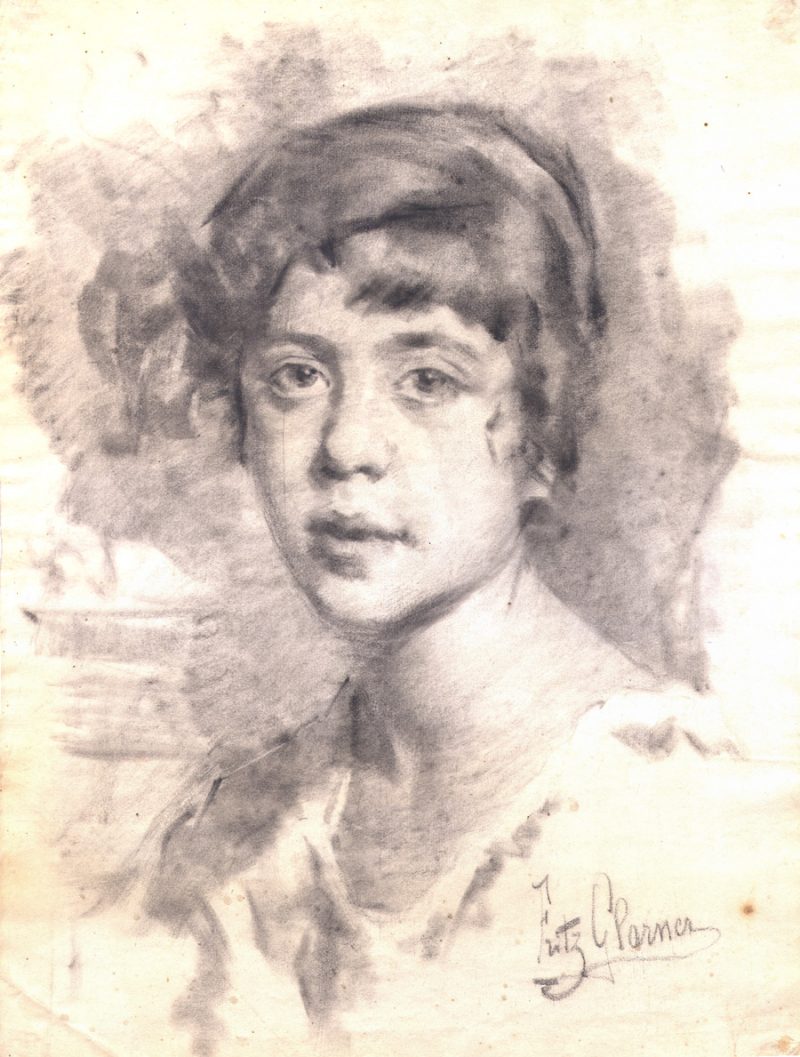
Portrait of a Girl by Fritz Glarner
(SOLD)
Beautiful large portrait of a girl.
Charcoal on paper
Dimensions: 19 X 14.5 inches
Condition: Some light browing and spotting of paper. Smudge line on left side of girl’s face – running down from eye.
SOLD
Note: A visitor to our site has informed us that this may be a portrait of Fritz Glarner’s sister-in-law (his brother’s wife), Vera Glarner-Guzarchik, who was originally from Russia and a first cousin of Ayn Rand.
July 20, 1899, Zurich – September 18, 1972, Locarno
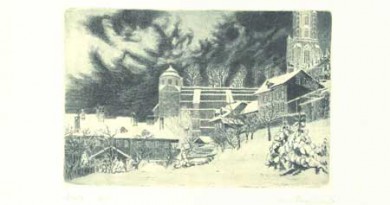
Fritz Glarner was a Swiss-born American artist best known as a pioneer of geometric abstraction and a key figure in the Concrete Art and Neo-Plasticist movements. Born in Zurich, Glarner spent much of his youth in Italy and France, where he received classical artistic training at the Royal Institute of Fine Arts in Naples. His early career included figurative and representational work, as represented in our Village Antiques collection of his early drawings from the artist’s estate.
In 1923, Glarner moved to Paris, where he encountered the European avant-garde and developed close ties with artists such as Piet Mondrian. He became part of the Abstraction-Création group and began evolving toward a language of pure geometric forms and carefully balanced compositions. After relocating to New York in 1936, Glarner became a prominent member of the American Abstract Artists group and developed what he termed “Relational Painting”—a system of dynamic interplay between color, form, and spatial tension, expanding on Mondrian’s grid structure.
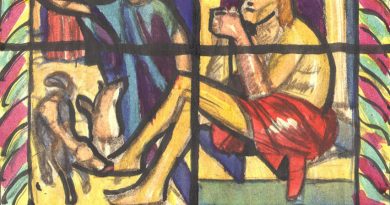
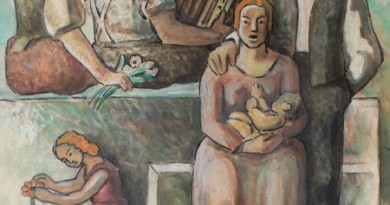
Though best known for his abstract compositions, early works reveal the foundations of his visual sensibility: clarity of line, structural focus, and a deep sensitivity to form. Glarner’s paintings are held in major public collections, including the Museum of Modern Art (New York) and the Kunsthaus Zürich. He also produced paintings for vast interior spaces such as the Dag Hammmarskjold Library at the United Nations and the lobby of the Time-Life building in New York.He spent his final years in Switzerland, where he died in Locarno in 1972.