Pancrace Bessa – Aloë Lingua from Flore des jardiniers
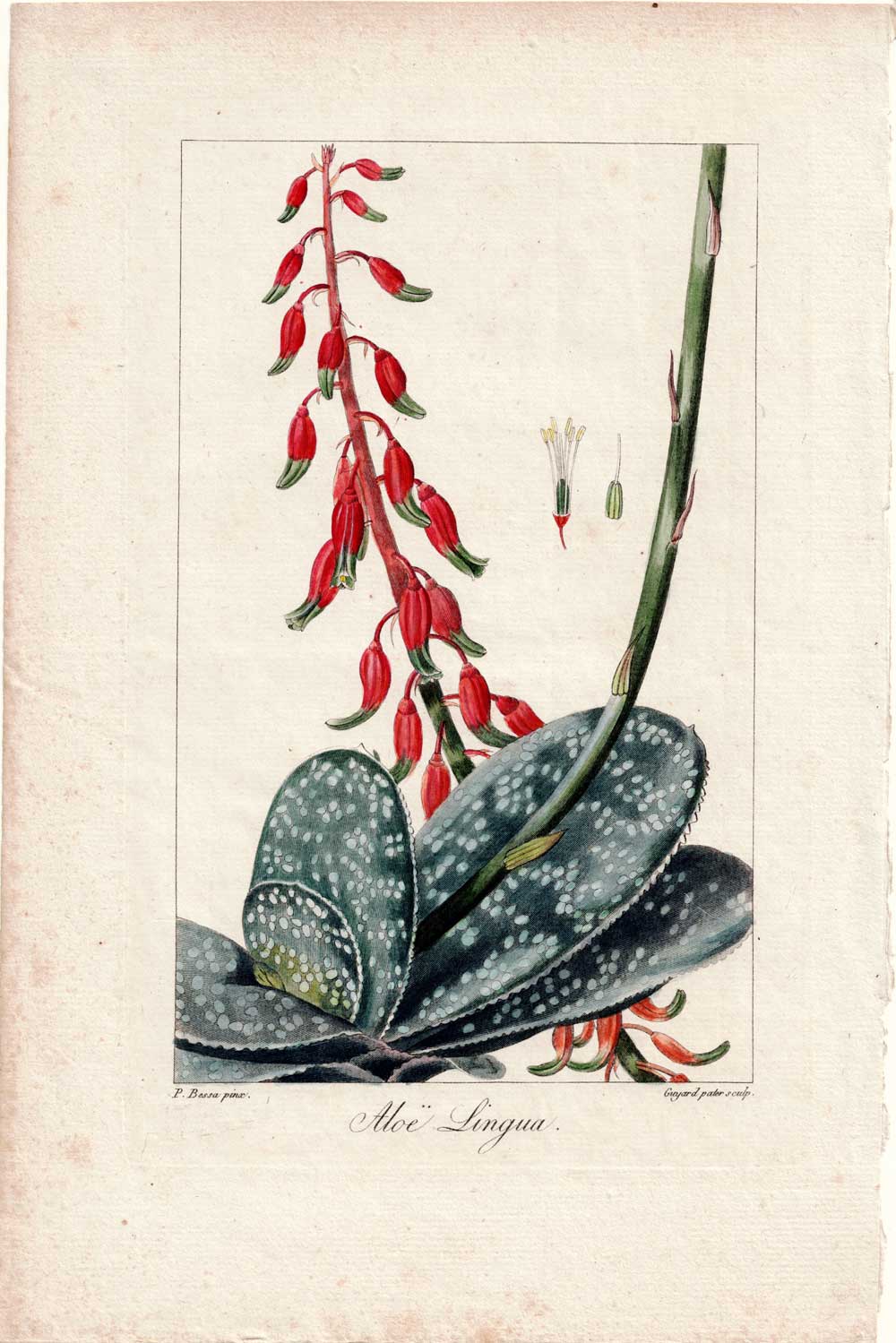
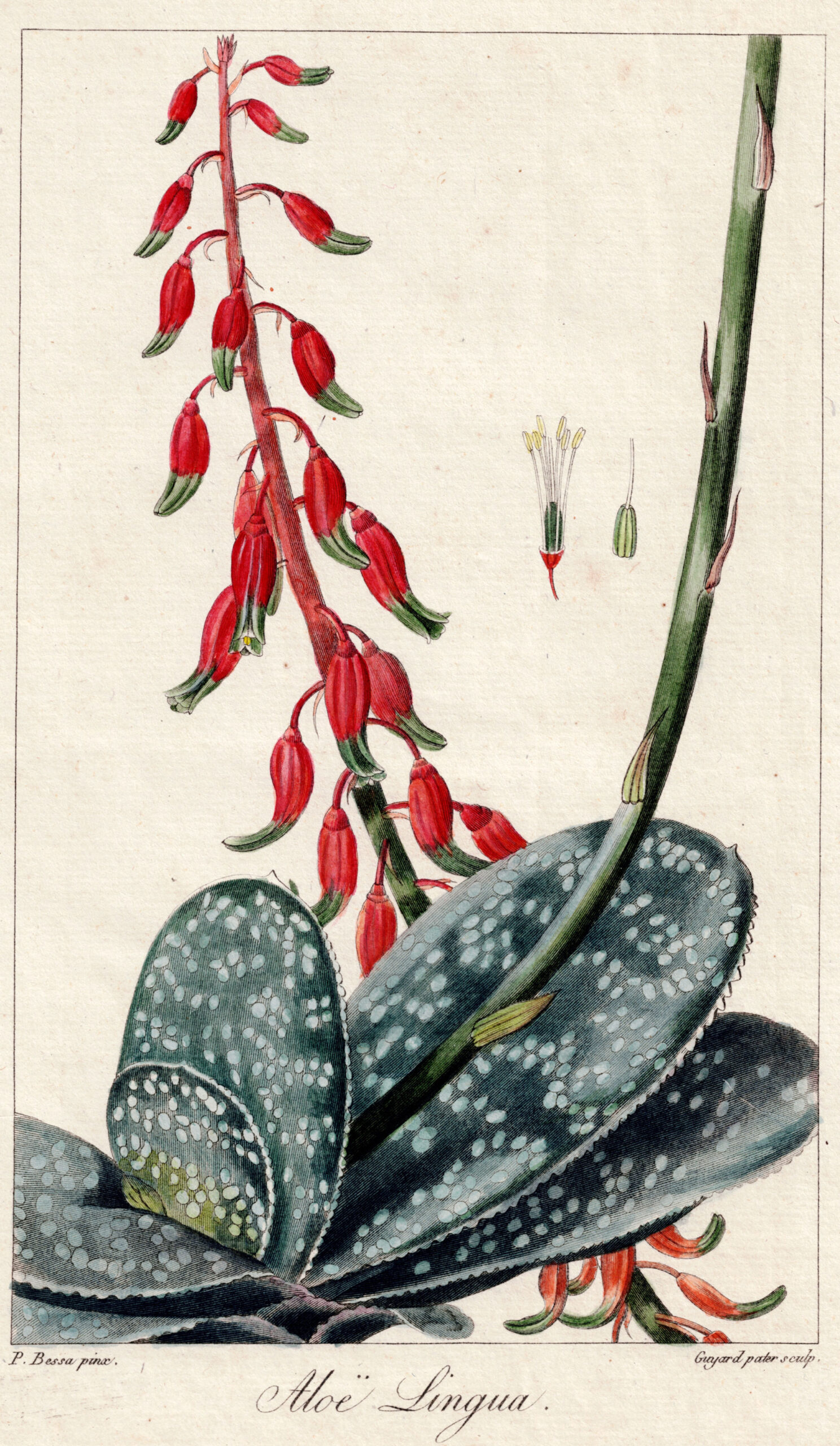
An original hand-coloured botanical engraving of Aloë Lingua, published in Paris in 1836 in Pancrace Bessa’s Flore des jardiniers, amateurs et manufacturiers.
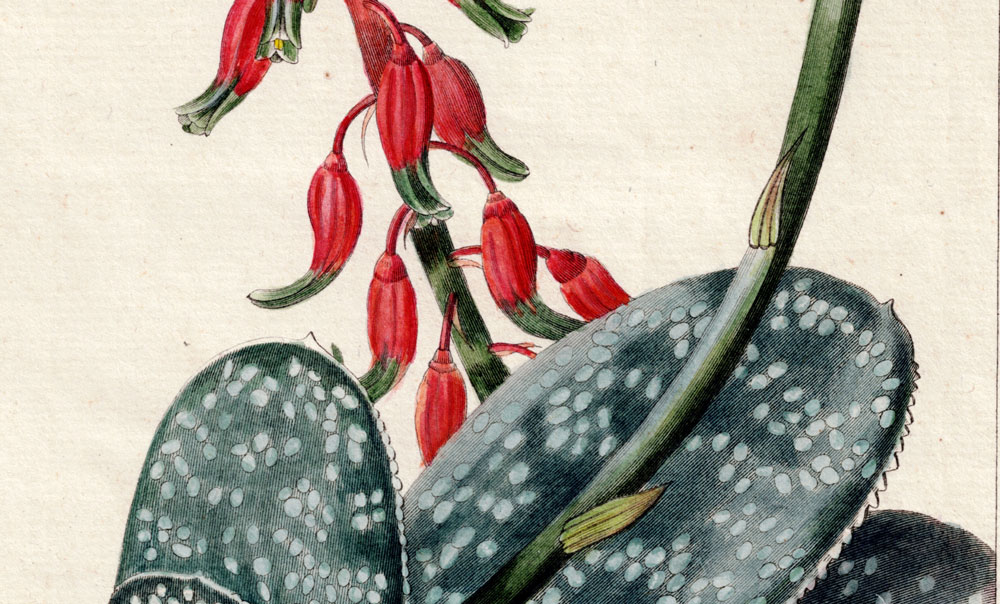
The plant is shown with its broad, tongue-shaped leaves, their grey-green surfaces densely patterned with pale markings, and a tall flower spike bearing pendant red blossoms tipped with green. Separate details of the flower’s reproductive structures appear beside the main specimen. The fine engraving and carefully applied colour capture both the unusual sculptural form of the succulent and the precise botanical detail for which Bessa’s work was admired. The name Aloë lingua is now treated as a synonym of Gasteria lingua.
Native to South Africa’s Eastern Cape, the plant grows naturally among rocks and scrub, frequently in partly shaded situations. Although identified here by the historical name Aloë lingua, it is now generally classified within the genus Gasteria and associated with Gasteria bicolor. Its distinctive mottled foliage has also made it a widely cultivated ornamental succulent.
Pancrace Bessa (1772–1846) was one of the leading French botanical artists of the early nineteenth century. Born in Paris, he studied with Gérard van Spaendonck and was closely associated with Pierre-Joseph Redouté and the distinguished circle of botanical artists working around the Jardin des Plantes. Bessa exhibited regularly at the Paris Salon and contributed illustrations to several important botanical publications, most notably the eight-volume Herbier général de l’amateur. In 1823 he was appointed painter of flowers to the Muséum national d’Histoire naturelle and contributed to the celebrated royal collection of botanical paintings on vellum known as the Vélins du Roi. His work is distinguished by its scientific accuracy, delicate colouring and elegant composition.
The inscriptions beneath the image read:
P. Bessa pinx. — painted or drawn by Pancrace Bessa
Guyard pater sculp. — engraved by Guyard père
Aloë Lingua — the botanical name of the plant