

Asiae Recensissima Delineatio Johann Baptis Homann, Nuremberg
Title of map (original language):
Asiae Recensissima Delineatio, Qua Status et Imperia Totius Orientis una cum Orientalibus Indiis exhibentur
Auctore Io. Bapt. Homann, Norimbergae
Regional annotations and coverage:
This richly engraved map of Asia was produced by Johann Baptist Homann in Nuremberg in the early 18th century. The map presents the political divisions and imperial structures of Asia, spanning from the eastern Mediterranean and Arabian Peninsula across the Indian subcontinent, Central Asia, China, Japan, and Southeast Asia, down to the East Indies and parts of New Guinea. To the north, it extends across Siberia into the Arctic Ocean.
The map includes striking cartouches: in the lower left, a large allegorical composition depicts Asia personified, surrounded by merchants, exotic animals such as a camel, lion, and leopard, and scenes of trade and tribute—underscoring Europe’s fascination with Asia’s wealth, power, and cultural diversity. In the upper right, another elaborate cartouche with Latin text explains the ambition of presenting a new and comprehensive geographic overview of Asia, mentioning the empires of Islam, the spread of various peoples, the vastness of China, and the victories of Christianity.
Description of the extensive cartouche texts:
The long Latin dedication in the upper right addresses the “benevolent spectator” and situates this new depiction of Asia in the broader history of cartography. It emphasizes the grandeur and diversity of Asian empires, highlights the role of the Islamic world, the scale of China, and notes the global mission of Christianity. Such explanatory cartouches were not merely decorative but served to contextualize maps as scholarly and cultural achievements, connecting geographic knowledge with political and religious narratives of the time.
Geographic coverage description:
The map shows Asia in bold continental outline, with regions tinted in contrasting hand color to distinguish empires and kingdoms. India, Persia, and Central Asia are shaded in green, China and Southeast Asia in darker tones, Russia and Siberia in purples, and Japan outlined in red. Geographic features are detailed, with rivers, mountain chains, and deserts carefully engraved. The mythical and speculative “Compagnies Land” (Compagnies Landt) is marked northeast of Japan, a cartographic curiosity associated with early 17th-century Dutch voyages. Similarly, “Terra Esonis” is depicted off the Asian coast, reflecting the ongoing European uncertainty about the true configuration of northeastern Asia and its connection (or not) to North America.
Location breakdown by modern country (place names clearly visible on the map):
Russia: Muscovy, Siberia, Nova Zemla, Kamtschatka
China: Peking, Nanking, Canton, Sian (Xi’an)
India: Goa, Bengala, Decan, Cambaia
Japan: Jedo (Edo/Tokyo), Nangasaki (Nagasaki), Osaka
Persia/Iran: Persia, Ormus, Ispahan
Arabian Peninsula (Saudi Arabia/Yemen/Oman): Mecha (Mecca), Medina, Ormus
Turkey: Constantinopel, Anatolia
Indonesia: Sumatra, Java, Borneo, Celebes, Moluccae (Moluccas), Timor
Philippines: Manila
Sri Lanka: Ceylon
Korea: Corea
Tibet (China): Lassa


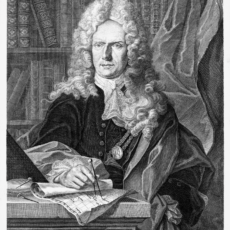
The famous German 18th Century cartographer Johann Baptist Homann founded a mapmaking firm in Nuremberg in 1702. Upon his death in 1724, it passed to his son Johann Christoph (1703-1730). and later was managed by Johann Michael Franz and Johann Georg Ebersberger under the name Homann Heirs (Homann Erben).

