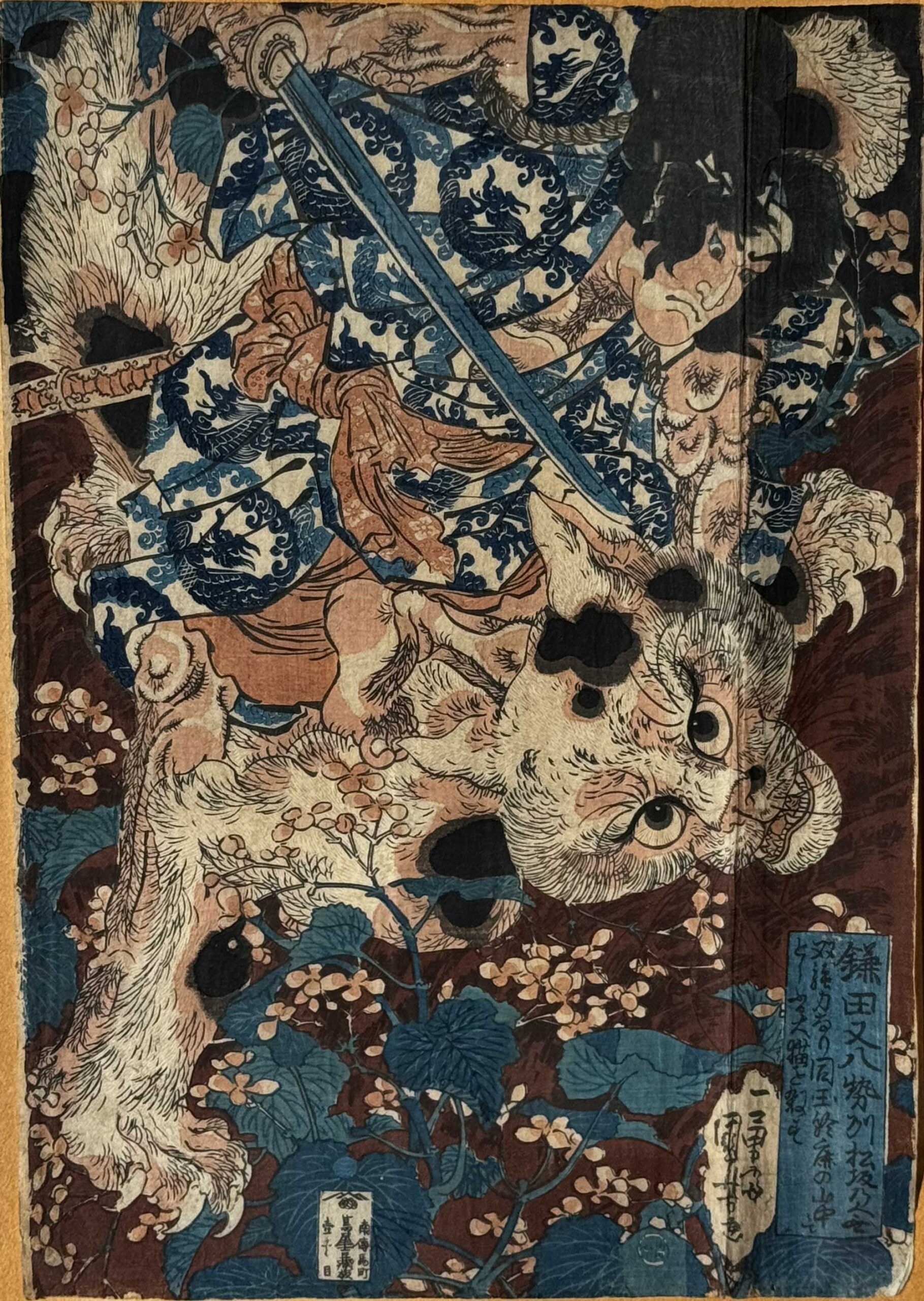
Utagawa Kuniyoshi – Kamata Matahachi Battling a Giant Cat, Circa 1840
Utagawa Kuniyoshi (歌川 国芳, 1798–1861) – “Kamada Matahachi Battling a Giant Cat”
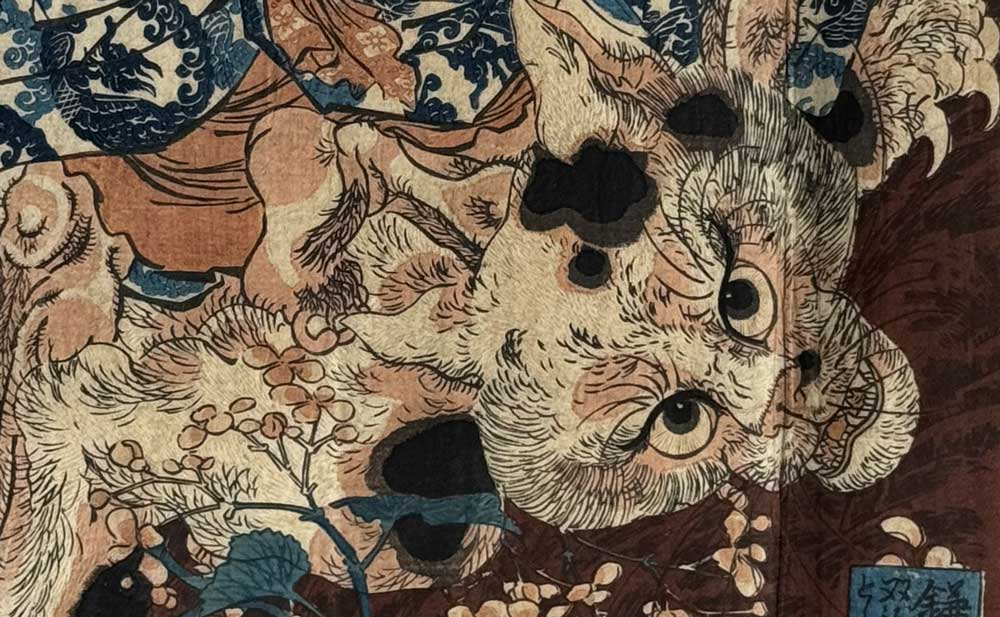
A dynamic Edo-period woodblock print by Utagawa Kuniyoshi (歌川 国芳), one of the most celebrated masters of ukiyo-e. The composition portrays the legendary warrior Kamada Matahachi locked in fierce combat with a monstrous giant cat. Kuniyoshi captures the intensity of the struggle with sweeping movement: the warrior, clad in a boldly patterned blue robe, raises his sword with determination, while the snarling beast, with its bristling fur and glaring eyes, lashes out in defiance.
The artist heightens the drama by contrasting the violence of the encounter with a background of delicately rendered blossoms and foliage, a hallmark of Kuniyoshi’s ability to combine elegance with explosive action. Scenes such as this drew inspiration from kabuki theatre and popular storytelling, embodying the Edo public’s fascination with heroic bravery and supernatural menace.
From the series Honcho Suikoden goyu happyakunin no hitori (800 Heroes of the Japanese Water Margin)/Miyamoto Musashi and the sw (c.1830/40)
Utagawa Kuniyoshi (歌川 国芳, 1798–1861) was one of the last great masters of the ukiyo-e tradition, celebrated for his imaginative and bold woodblock prints. A member of the Utagawa school, he became famous for his dramatic portrayals of warriors, kabuki actors, landscapes, and supernatural beings. Kuniyoshi had a particular gift for depicting animals and mythical creatures, often blending humor, fantasy, and action. His warrior prints stand out for their energy and inventive storytelling, qualities that left a lasting influence on Japanese art and later visual culture, including modern manga.
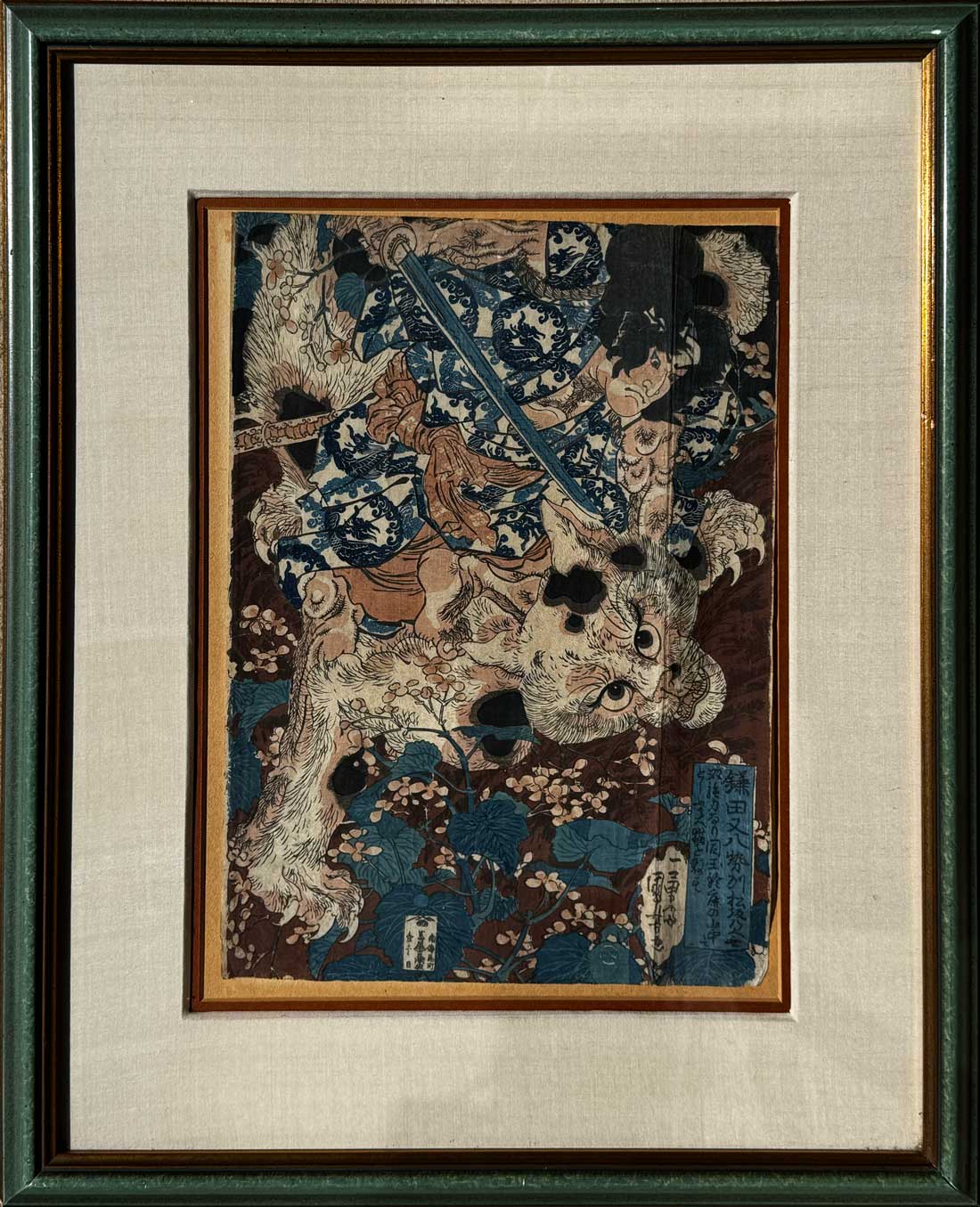
Format: Woodblock print, framed under glass with cream silk mount and green-toned frame
Condition: General age toning and some fading, with several old vertical creases and minor wear and losses around the irregularly trimmed edges. The colors remain strong in many areas, particularly the blues, and the finely carved detail is well preserved. The print has not been laid down and is presented floating within a cream silk mount and green-toned frame.